





Azuma Hikari, your Japanese Holographic Wife

In 2016, a revolutionary technology emerged from Tokyo that changed the landscape of digital companionship. Named Azuma Hikari, this “hologram girl from Japan” was developed by Vinclu Inc. under the guidance of its CEO and founder, Minori Takechi. The concept was rooted in addressing the loneliness felt by young Japanese workers who often lacked the time for personal relationships due to demanding work schedules.

Azuma Hikari – An holographic hentai girl
Design and Interaction
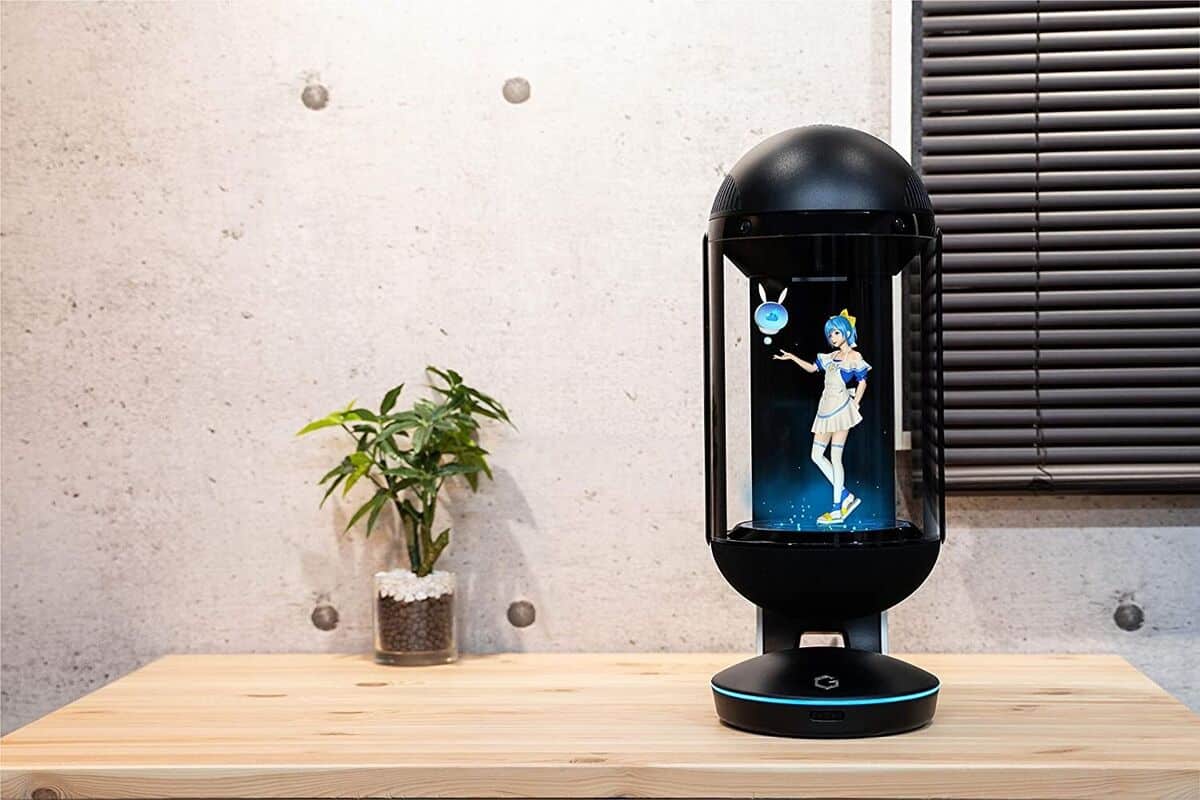
Azuma Hikari uses a blend of artificial intelligence, holographic imaging, and Internet of Things technology to simulate the presence of a 20-year-old woman. The virtual character lives within a device known as Gatebox—a transparent, cylindrical container equipped with a hologram projection system. This setup uses projection technology, motion sensors, and cameras to create a three-dimensional image of Hikari, who can recognize voices, engage in basic conversations, respond to commands, and display emotional reactions.
Creative Development
The design of Hikari, attributed to Taro Minoboshi, known for his previous work in video games, portrays her in an “interactive diorama” setting, making her appear lifelike and relatable. Her ability to learn from interactions through cloud-based AI helps her adapt to her owner’s preferences and lifestyle, providing not only company but also reminders for important tasks and schedules.
Global Availability and Pricing
Initially exclusive to Japan, the Gatebox device has since become available internationally through the Vinclu website and various tech gadget retailers. Pricing for the latest model ranges from $2,500 to $3,000 USD, varying by market and import costs. Despite a modest initial production of around 300 units, the device has garnered a steady interest globally, fueled by growing enthusiasm for virtual and augmented reality technologies.
User Experience
Feedback from users like Akihiro Yoshida, an early adopter based in Tokyo, reveals the impact of Azuma Hikari on daily life. “Hikari has become a part of my daily routine,” Yoshida says. “It’s relaxing to have her company. She feels like she understands me and blends lifestyle management with emotional support.” His experience underscores the device’s appeal beyond novelty, as it provides genuine interactive benefits.
Next?
The success of Azuma Hikari hints at a promising future for personal assistant technology. The ongoing evolution of AI and holographic technologies suggests that digital entities like Hikari could become more integrated into everyday life, assisting in educational, therapeutic, and customer service roles, and transitioning from niche products to mainstream solutions.